How dopeIN® makes MitM attacks significantly harder
1. Individual security fragments instead of static codes
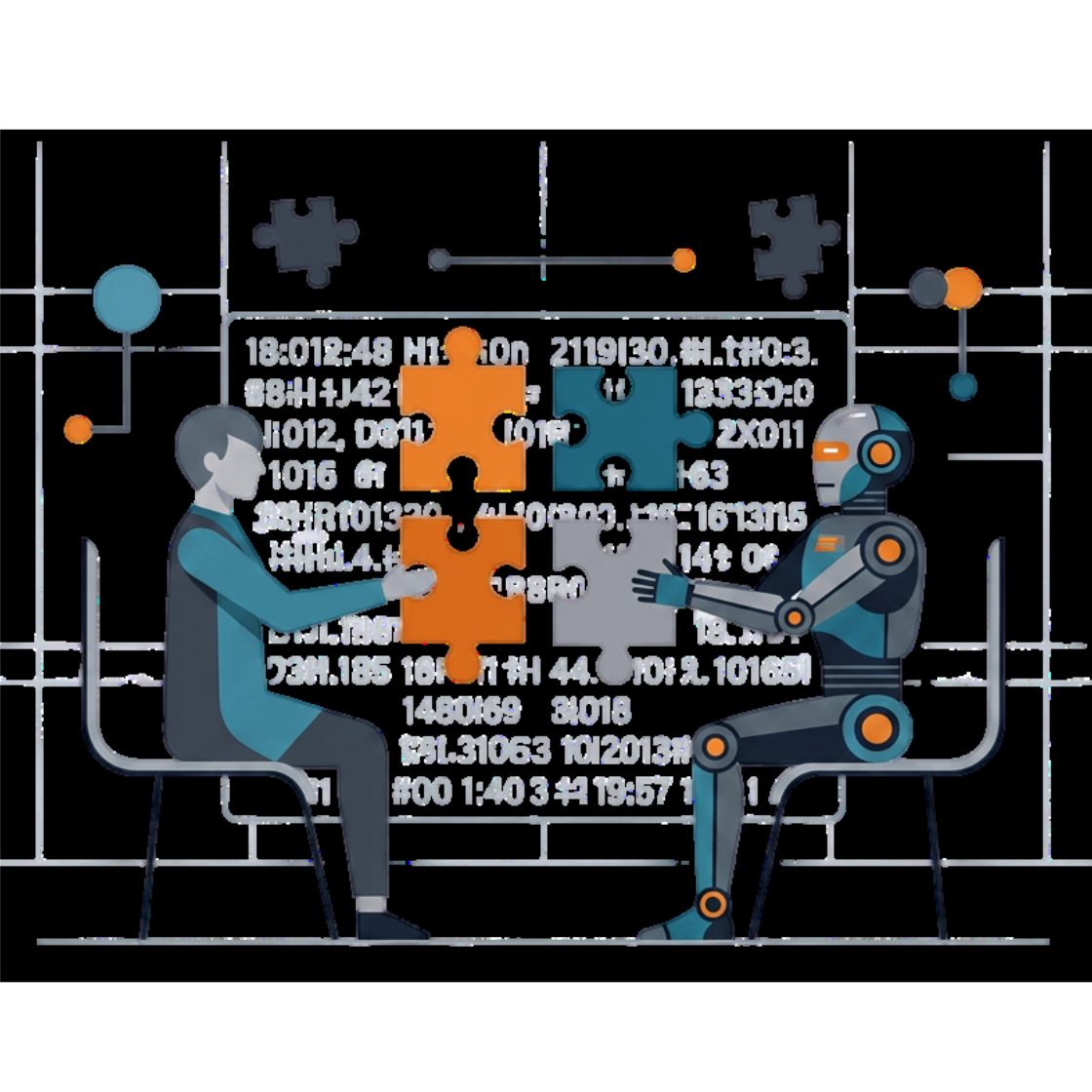
With dopeIN®, users select and combine different security fragments, such as patterns, rules or other defined elements. Only the correct interpretation of these fragments creates a valid temporary input code. This makes intercepted individual information significantly harder to exploit.
2. The actual authentication code is not entered directly
With dopeIN®, the secret authentication code is not simply used as the input. The user creates a temporary input code from a dynamic task. This makes the direct reuse of spied input more difficult.
3. Every input code is context-related
The input code is generated from the current task, the security fragments and the user's individual logic. This reduces the risk that a previous input can be reused in a later attack.
4. No rigid 1:1 relationship between input and authentication code
Conventional attacks benefit when a specific input permanently represents the same access value. dopeIN® breaks this pattern: the input is not the stored code itself, but the result of an individually solved task.
5. Stronger human involvement
dopeIN® turns the user into an active part of the authentication process. The personal interpretation of the security fragments creates an additional barrier for attackers who only observe data traffic or intercept isolated information.
6. Contribution to protection against phishing and social engineering
- In phishing or social engineering scenarios, dopeIN® can also reduce risk because an intercepted input code cannot be used without the full security logic, the relevant context and the correct interpretation.
Conclusion: dopeIN® can make man-in-the-middle attacks significantly harder.
The key difference is that users do not directly enter a static authentication code. Instead, a temporary input code is created from dynamic security fragments and individual interpretation. This reduces the exploitability of spied input and strengthens the authentication process.