


AI can help to understand software, analyse technical processes and develop similar functions. This raises an important question for companies, investors and development partners: what protects an innovation when the way it works becomes easier to understand?
In the case of dopeIN®, a significant part of the answer lies in patent protection. This protection relates to the claimed authentication method. A different interface or rewritten code therefore does not automatically provide a way round the intellectual property rights.
REA and Patents: Why the Method Protection of dopeIN® Is Strategically Important in the Age of AI
REA and Patents: Why the Process Protection of dopeIN® Is Strategically Important in the Age of AI

What is REA?
In this article, REA stands for AI-supported reverse engineering and the subsequent reengineering process.
Reverse engineering involves examining an existing product or system to understand how it functions. This process can begin with, for example, available programs, interfaces, technical documentation, or observable user interactions. Reengineering refers to the subsequent revision or redesign of a solution.
AI can support such tasks — for instance, by helping to explain decompiled code or uncover technical relationships. While errors and incomplete reconstructions remain a possibility, this approach opens up new avenues for analyzing existing solutions and developing functionally similar implementations.
For innovative companies, this makes the distinction between technical replicability and legal usability increasingly important.
Understanding does not mean having the right to use freely
Understanding a process does not, in itself, confer the right to use it for commercial purposes.
This is where the significance of patent protection lies: a patent creates a legal exclusive right. In the case of a protected method, the patent holder can, among other things, prohibit its unauthorized use. Even independent reprogramming may fall within the scope of protection; the decisive factor is whether it implements the protected technical teaching.
REA does not set aside this system of protection. While it may provide access to knowledge regarding a technical solution, it does not grant permission for its use.
Why the protection of a method can extend beyond a specific implementation
A technical function can often be implemented using various programming languages, user interfaces, and system architectures. If a competitive advantage were to depend solely on a specific implementation, a functionally similar, newly developed solution could diminish that advantage.
A method patent can offer broader protection. Its scope is defined by the patent claims, which cover a specific combination of technical features and procedural steps. Neither a new approach to programming nor a change in appearance negates this protection, provided that the implementation in question still falls within the scope of the patent.
This highlights the strategic distinction between the effort required to develop a solution and the legal right to utilize a specific process. While AI may influence the development effort, any existing patent must still be taken into account when implementing or using such a solution.
How dopeIN® fits in here
The dopeIN® method centers on the active participation of the user in the authentication process. The user applies an individual rule to temporary data to generate their specific input.
The German patent (Patent DE 10 2021 125 572 —
DPMA +
Google Patents) describes a technically defined procedure for this. This includes the creation of an authentication algorithm from security fragments, its integration with a user-defined authentication code, the provision of temporary authentication data, and the subsequent transformation and verification of that data. The assignment to an authentication system and the exchange of data between the involved systems are also integral parts of the claimed method.
The protection thus relates to a specific technical framework. The visible interface represents only a portion of this process.
dopeIN® Interactive serves as a didactic demonstrator to illustrate the underlying principle. The colors, numbers, and interactions used therein are intended to facilitate understanding. For development partners, the task lies in implementing the method in a productive manner tailored to the specific field of application.
Why REA does not offer an easy way to circumvent the dopeIN® patent
Through analysis, a company might determine how a specific dopeIN® application functions. It could subsequently design its own user interface, utilize different software components, or rewrite the code entirely.
However, this does not automatically result in a freely usable alternative. If the implementation realizes the protected process flow, the patent remains relevant.
A permissible technical alternative must lie outside the scope of protection. This may require a different solution — one that goes beyond mere cosmetic changes or new programming. Furthermore, replacing individual technical elements does not necessarily circumvent patent protection, as equivalent implementations may also be covered under certain conditions.
The crucial point is this: reverse engineering and analysis (REA) may shorten the path to technical understanding, but it does not grant the right to use the
protected method.
The value this holds for investors and project partners
For investors, it is crucial to determine whether a technical development can be secured beyond a mere short-term head start in implementation. A method patent provides a legal foundation for this; it can protect an economically significant solution, even if competitors are capable of developing similar functions more rapidly.
For project partners, it establishes a basis for collaboration. Through a license, the use of the protected method can be contractually regulated, serving as a foundation for proprietary implementations, industry-specific applications, and joint development projects.
Furthermore, the public description of the method facilitates professional exchange: interested parties can learn about the technical principles involved and discuss potential applications. It should be noted, however, that such disclosure does not constitute a general authorization for use.
Economic value emerges from the interplay between intellectual property rights, practical utility, and successful implementation. A patent can safeguard one’s legal position, while development partners translate the technology into concrete applications, thereby unlocking its market potential.
Why this matters, especially in the age of AI
As technical functions become easier to analyze and faster to reimplement, the question of which components of an innovation can be durably defended gains significance.
For dopeIN®, the method patent is a core element of this defensive position. It establishes a legal framework for the use of the claimed technical teaching — a framework that remains relevant even as development tools and analytical capabilities evolve.
This protection applies within its specific territorial and substantive scope.
The strategic opportunity lies in collaboratively transforming the protected approach into viable, practical applications. For investors and project partners, dopeIN® thus combines a technical development roadmap with a foundation for commercial exploitation backed by patents.
Are you interested in incorporating dopeIN® into your security architecture, or would you like to help shape its implementation as a development and project partner? Together, we can define specific use cases, integration pathways, and licensing models.
Learn more:
23. November 2026
Nächster Schritt
Möchten Sie dopeIN® praktisch erleben oder als Lösung integrieren?

Next step
Would you like to experience dopeIN® in practice or integrate it into your offering?
KI erleichtert die Analyse technischer Lösungen. Warum ein Nachbau dadurch nicht frei nutzbar wird und welchen strategischen Wert das dopeIN®-Patent bietet.
Live-Webinar: „Smarte Brille. Falscher Klick. Neue Wege zur Sicherheit.“

Live Webinar: “Smart Glasses. Wrong Click. New Paths to Security.”
Ein Hash-Leak ist nie harmlos. Warum Authentisierung mehr braucht als sichere Speicherung und einzelne Werte nicht alles entscheiden sollten.
A hash leak is never harmless. Why authentication needs more than secure storage and why individual values should not decide everything.
Experience dopeIN® as an interactive prototype: dynamic MFA without a second device or biometrics, using active user logic.
Erleben Sie dopeIN® als interaktiven Prototyp: dynamische MFA ohne Zweitgerät und ohne Biometrie, mit aktiver Nutzerlogik.

A practical video shows how dopeIN® uses cognitive tasks to make logins secure, flexible and free from rigid passwords.
Ein Praxisvideo zeigt, wie dopeIN® kognitive Aufgaben nutzt, um Logins sicher, flexibel und ohne starre Passwörter zu gestalten.
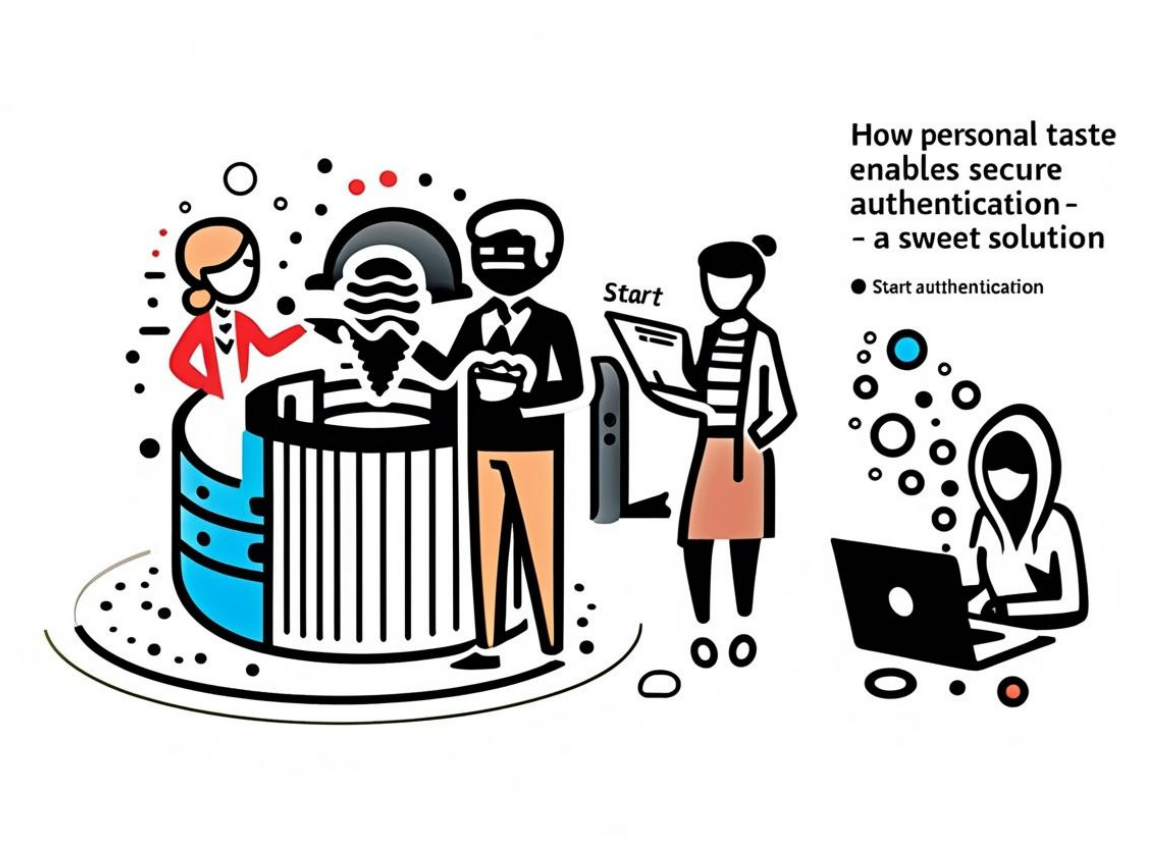
Discover how personal logic and taste make login secure without a second device or biometrics.
Hören Sie, wie persönliche Logik und individueller Geschmack sichere Authentisierung ohne Zweitgerät oder Fingerabdruck ermöglichen.

dopeIN® keeps authentication flexible: licensable, integrable into existing infrastructure and independent of proprietary hardware.

How dopeIN® makes MitM attacks harder: dynamic codes, security fragments and active user interpretation.
dopeIN® hält Authentisierung flexibel: lizenzierbar, integrierbar in eigene Infrastruktur und unabhängig von proprietärer Hardware.
Wie dopeIN® MitM-Angriffe erschwert: dynamische Codes, Sicherheitsfragmente, keine Klartextcodes und aktive Nutzerinterpretation.

This deep-dive podcast explores dopeIN®, dynamic MFA, user needs and future cyber threats from AI and quantum computing.

dopeIN® combines multiple security factors in one smart input, reducing device dependency, effort and complexity.
